

Why Ingredients Matter in Dog Food
Understanding dog food ingredients to avoid is one of the most important steps toward protecting your dog’s long-term health. While many dog food packages highlight appealing claims on the front label, the true quality of the food is revealed in the ingredient list.
Dogs rely entirely on their diet for energy, immune support, digestion, and overall well-being. Low-quality or harmful ingredients consumed over time may contribute to allergies, digestive discomfort, weight problems, and chronic health conditions. This makes ingredient awareness a critical responsibility for every dog owner.
Learning which ingredients to question does not require expert-level knowledge. With basic understanding and careful label reading, owners can make safer, more informed choices that support their dog’s health at every life stage.
👉 Dog Nutrition Basics: Essential Nutrients for a Healthy Dog
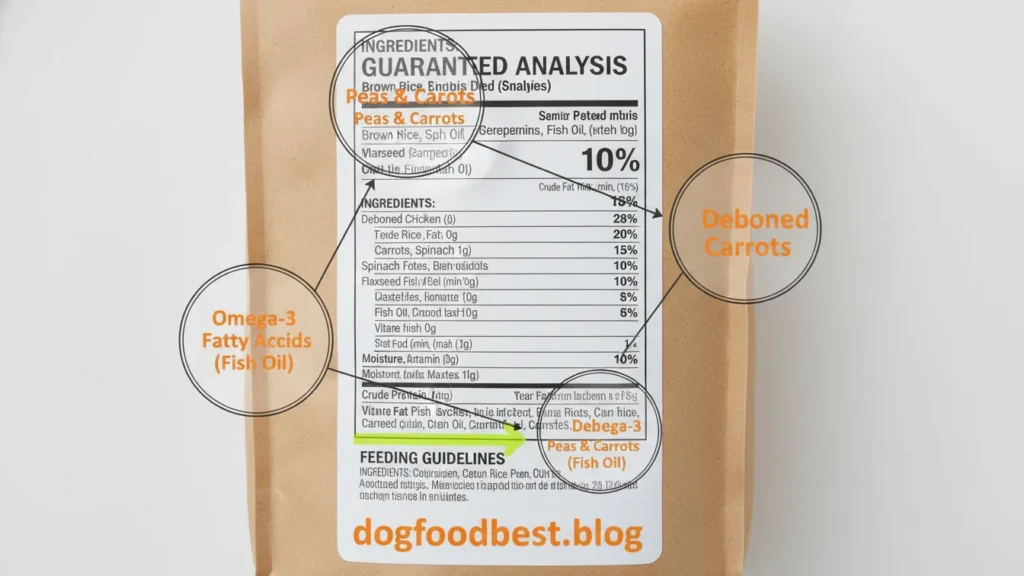
Understanding Dog Food Labels
Dog food labels can be confusing, especially for new dog owners. Ingredients are listed by weight before cooking, meaning the first few items make up the majority of the formula. This makes early ingredients especially important when evaluating food quality.
High-quality dog foods clearly identify animal protein sources such as chicken, beef, or salmon. In contrast, vague terms like “meat meal” or “animal by-products” provide little transparency about what your dog is actually eating.
Labels may also include technical or unfamiliar names for additives, preservatives, and flavor enhancers. Understanding these terms helps owners move beyond marketing claims and focus on what truly matters: nutritional value, digestibility, and ingredient safety.
👉 Best Dog Food Brands: How to Choose the Right Food for Your Dog
Artificial Preservatives to Avoid
Artificial preservatives are commonly used to extend shelf life, but some raise concerns when consumed regularly. Ingredients such as BHA, BHT, and ethoxyquin are among the most frequently discussed preservatives in dog food.
These chemicals help prevent fats from spoiling, but long-term exposure has been questioned by researchers and veterinarians alike. While regulatory agencies allow limited use, many owners prefer to avoid unnecessary chemical additives whenever possible.
Natural preservatives such as mixed tocopherols (vitamin E) or ascorbic acid (vitamin C) are often considered safer alternatives. Choosing foods preserved naturally reduces long-term exposure to synthetic compounds.
Artificial Colors and Flavors
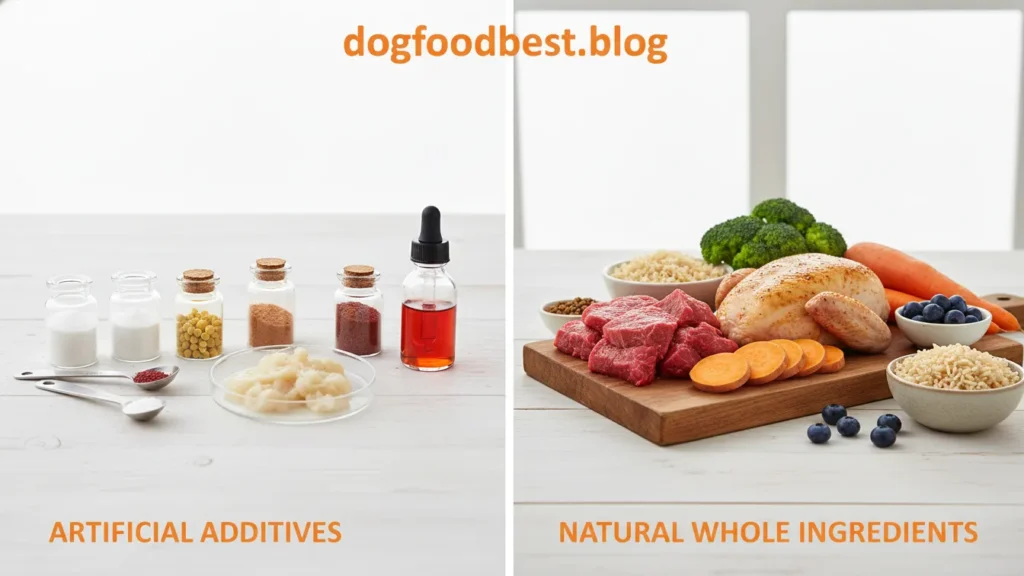
Artificial colors and flavors serve no nutritional purpose in dog food. Dogs do not choose food based on appearance, making these additives primarily appealing to human buyers rather than pets.
Some artificial dyes and flavorings have been associated with allergic reactions, skin irritation, or digestive upset in sensitive dogs. Eliminating unnecessary additives simplifies the diet and reduces the risk of adverse reactions.
High-quality dog food focuses on ingredient quality rather than visual appeal. Natural ingredients provide flavor and nutrition without the need for artificial enhancement, supporting a cleaner and more transparent diet.

(Aqui você insere a Image 2 – ingredientes naturais comparados a aditivos artificiais, estilo educativo, sem cão na cena)
Generic Meat By-Products
One of the most concerning items on dog food labels is the use of generic meat by-products. Unlike clearly named protein sources, generic by-products do not specify the animal origin or quality of the ingredients used.
This lack of transparency makes it difficult for owners to assess nutritional value or safety. Generic by-products may include a wide range of animal parts, some of which offer limited nutritional benefit. Inconsistent sourcing can also lead to variation in quality from batch to batch.
High-quality dog foods clearly identify protein sources, such as chicken meal or beef meal. Choosing foods with transparent labeling allows owners to better understand what their dog is consuming and reduces the risk of low-quality protein intake.
👉 Dog Food Ingredients to Avoid: What Every Owner Should Know
Excessive Fillers and Low-Quality Grains
Fillers and low-quality grains are often used to increase volume and reduce production costs. Ingredients such as excessive corn, wheat, or soy may provide calories but offer limited nutritional value when used in large amounts.
While some grains can be part of a balanced diet, overreliance on fillers may lead to poor digestibility, nutrient dilution, and inconsistent energy levels. Dogs may feel full without receiving adequate nutrition.
Foods that prioritize whole ingredients and balanced formulations provide better support for digestion and overall health. Evaluating the ingredient list helps distinguish between purposeful nutrition and cost-driven formulations.
Added Sugars and Sweeteners
Added sugars and sweeteners have no nutritional benefit for dogs. Ingredients such as corn syrup, cane molasses, or other sweeteners are sometimes included to enhance taste rather than improve health.
Regular consumption of added sugars may contribute to weight gain, dental problems, and blood sugar imbalances. Over time, these effects can increase the risk of obesity and metabolic issues.
Dogs do not require sweet flavors to enjoy food. High-quality ingredients naturally provide palatability without the need for added sugars. Avoiding sweetened formulas supports healthier long-term feeding habits.
Artificial Thickeners and Binders
Artificial thickeners and binders are commonly found in wet dog food and processed formulas. Ingredients such as carrageenan or certain gums are used to improve texture and appearance.
While these additives are generally considered safe in small amounts, some dogs may experience digestive sensitivity when exposed regularly. For dogs with sensitive stomachs, repeated exposure may lead to loose stools or gastrointestinal discomfort.
Choosing foods with minimal processing and simpler ingredient lists helps reduce unnecessary additives. Fewer binders often indicate a focus on ingredient quality rather than visual presentation.
High-Sodium and Flavor Enhancers
High levels of sodium and artificial flavor enhancers are sometimes used to increase palatability in low-quality dog food. While small amounts of sodium are necessary for normal body functions, excessive levels can be problematic, especially when consumed daily.
Dogs that regularly eat high-sodium foods may experience increased thirst, fluid retention, or strain on the kidneys over time. This concern is even greater for senior dogs or dogs with existing health conditions.
Flavor enhancers are often added to compensate for poor ingredient quality. Choosing foods with naturally flavorful ingredients reduces the need for artificial taste boosters and supports better long-term health.
Controversial Ingredients and Ongoing Debates
Some dog food ingredients fall into a gray area, where opinions vary among professionals. These ingredients may not be inherently harmful but can raise concerns depending on quality, sourcing, and quantity.
Examples include certain rendered meals, plant-based protein concentrates, or specific preservatives approved for limited use. The key is understanding context rather than reacting to ingredient names alone.
Evaluating how an ingredient is used within the overall formula helps owners make balanced decisions. A single controversial ingredient does not automatically make a food unsafe, but repeated exposure across poor formulations may increase risk.
When These Ingredients Might Be Acceptable
Not all questionable ingredients are equally harmful in every situation. In some cases, limited amounts of certain additives may be acceptable when used responsibly and within safe guidelines.
For example, a food formulated to address specific dietary needs may include ingredients that are otherwise avoided in general diets. Veterinary guidance is especially important when managing health conditions that require specialized nutrition.
The goal is not perfection but informed decision-making. Understanding ingredient purpose, dosage, and frequency helps owners avoid unnecessary fear while still protecting their dog’s health.
How to Choose Safer Dog Food Options
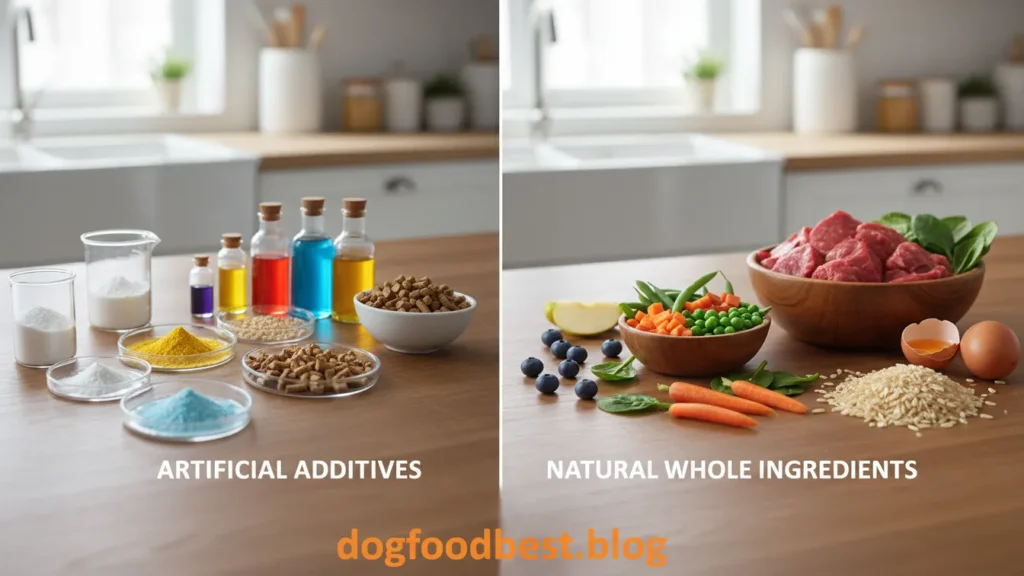
Choosing safer dog food starts with ingredient transparency. Foods that clearly list named protein sources, natural preservatives, and recognizable ingredients are generally more trustworthy.
Shorter ingredient lists often indicate less processing and fewer unnecessary additives. Looking beyond front-label marketing claims allows owners to focus on nutritional substance rather than branding.
👉 Best Dog Food Brands: How to Choose the Right Food for Your Dog
(Aqui você insere a Image 3 – análise visual de rótulo de ração com checklist de ingredientes seguros, estilo educativo, sem cão na cena)
Transitioning Away from Low-Quality Dog Food
Once you identify problematic ingredients in your dog’s current food, transitioning to a higher-quality option should be done gradually. Sudden dietary changes can cause digestive upset, including diarrhea or loss of appetite.
A slow transition over seven to ten days allows the digestive system to adapt. Start by mixing a small portion of the new food with the old food and gradually increase the ratio.
👉 How to Switch Dog Food Safely: A Step-by-Step Transition Guide
Monitoring stool quality, energy levels, and appetite during the transition helps ensure a smooth change.
Final Thoughts: Protecting Your Dog Through Better Choices
Understanding dog food ingredients to avoid empowers owners to make better decisions every day. Small changes in food selection can have a meaningful impact on digestion, energy, and long-term health.
Rather than relying on marketing claims, focusing on ingredient quality and transparency creates a more reliable foundation for feeding choices. Over time, these informed decisions help reduce unnecessary health risks.
By staying informed and attentive to ingredient labels, you can actively protect your dog’s well-being and support a healthier, more balanced life.