
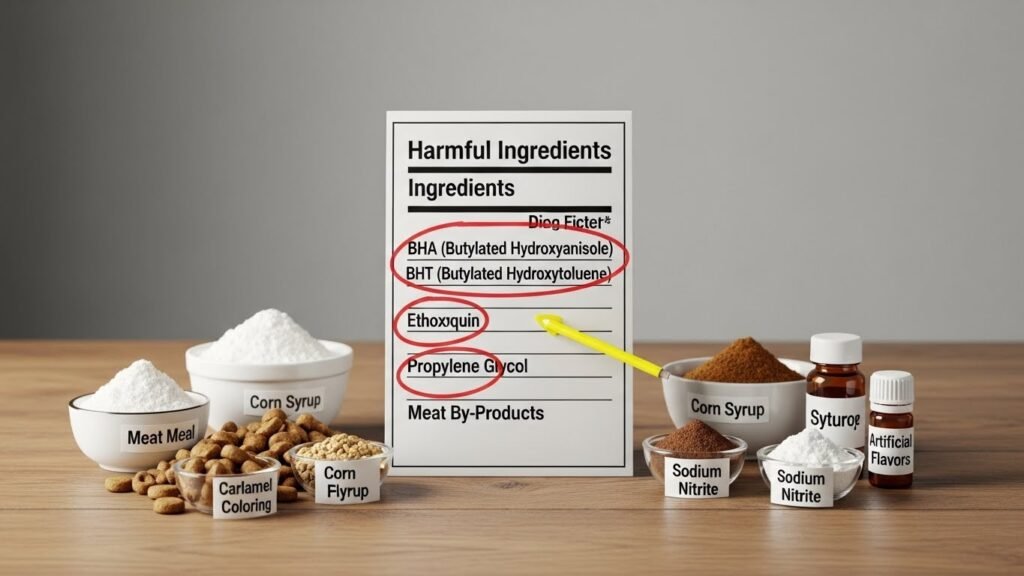
Understanding dog food ingredients to avoid is essential for protecting your dog’s long-term health. Many commercial dog foods contain additives, fillers, and low-quality ingredients that offer little nutritional value and may contribute to chronic health problems when consumed regularly.
This guide explains the most common harmful ingredients found in dog food, why they are problematic, and how to identify safer alternatives when choosing food for your dog.
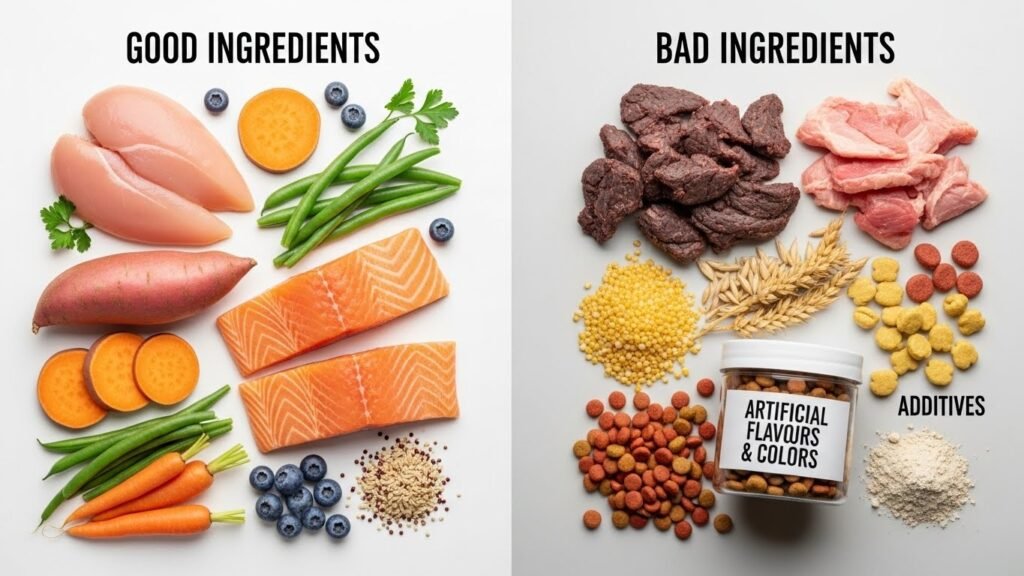
Why Ingredient Quality Matters
Dogs rely entirely on their diet for essential nutrients. When food is made with low-quality ingredients, it can lead to digestive issues, food sensitivities, weight gain, inflammation, and reduced energy levels. Over time, poor nutrition may weaken the immune system and increase the risk of chronic conditions.
Learning how to read ingredient lists and recognize red flags allows you to make better decisions and avoid unnecessary health risks.
Artificial Preservatives
Artificial preservatives such as BHA, BHT, and ethoxyquin are commonly used to extend shelf life. While effective for storage, these chemicals have been linked to potential health concerns when consumed over long periods.
Safer alternatives include natural preservatives like mixed tocopherols (vitamin E) and ascorbic acid (vitamin C). Choosing foods with natural preservation methods reduces long-term exposure to questionable additives.
Artificial Colors and Flavors
Artificial colors and flavors are added solely to make dog food more appealing to humans. Dogs do not care about food color, and these additives provide no nutritional benefit.
In some dogs, artificial dyes may trigger allergic reactions, itching, or digestive discomfort. Eliminating unnecessary additives helps simplify your dog’s diet and reduce the risk of sensitivities.
Excessive Fillers and Low-Quality Carbohydrates
Fillers such as corn, wheat, and soy are often used to increase volume at a lower cost. While small amounts may be acceptable for some dogs, excessive use can dilute nutritional value and contribute to digestive issues or weight gain.
Dogs benefit more from nutrient-dense ingredients than from large quantities of cheap carbohydrates.
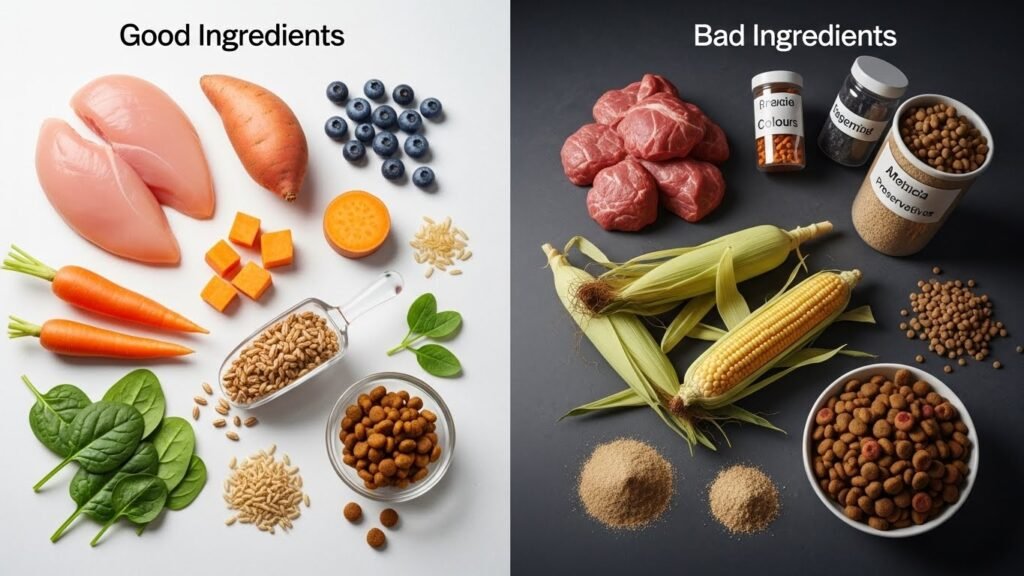
Generic Meat By-Products
Ingredients listed as “meat by-products,” “animal digest,” or “meat meal” lack transparency. These terms may include low-grade protein sources that vary widely in quality and digestibility.
High-quality dog food brands clearly identify protein sources, such as chicken, beef, lamb, or salmon, allowing owners to make informed choices.
Added Sugars and Sweeteners
Some dog foods contain added sugars to improve taste. Ingredients such as corn syrup, sucrose, or molasses contribute unnecessary calories and may increase the risk of obesity and dental issues.
Dogs do not require added sugars, and their presence often signals a lower-quality formulation.
Salt and Artificial Flavor Enhancers
Excessive sodium and artificial flavor enhancers are sometimes used to compensate for poor ingredient quality. High salt intake can stress a dog’s kidneys and contribute to dehydration, especially in older dogs.
Foods with balanced sodium levels and natural flavor sources are a safer choice.
How to Choose Safer Dog Food
Choosing safer dog food starts with reading labels carefully and prioritizing transparency. Look for:
- Named animal proteins as the first ingredient
- Natural preservatives
- Limited ingredient lists
- Clear nutritional information
Any dietary change should be introduced gradually to avoid digestive upset.

Final Thoughts
Knowing which dog food ingredients to avoid empowers you to protect your dog’s health and make smarter feeding decisions. Small improvements in ingredient quality can lead to noticeable benefits in digestion, energy levels, and overall well-being.
By focusing on transparency and nutrition rather than marketing claims, you can build a safer, healthier diet that supports your dog throughout every life stage.
Practical Tips for Avoiding Harmful Ingredients
When choosing dog food, take a few extra minutes to read the full ingredient list rather than relying on front-label claims. Ingredients are listed by weight, so the first five items provide the clearest picture of overall quality.
Keeping a short list of ingredients to avoid on your phone can help you make safer choices quickly, especially when comparing unfamiliar brands. Over time, this habit significantly reduces the risk of feeding low-quality or harmful ingredients.