
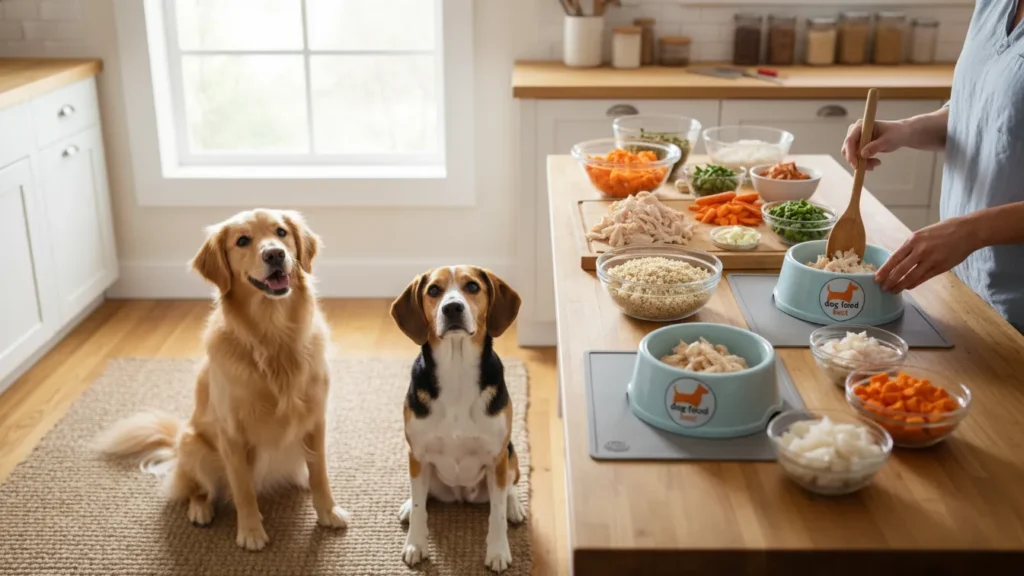
🧱 Free Homemade Dog Food Recipes
Preparing homemade food for your dog can be a rewarding experience. Beyond the joy of cooking, it allows you to know exactly what goes into your dog’s bowl and to offer fresh, simple meals made with real ingredients. Many dog owners choose homemade recipes as an occasional alternative to commercial food, as a topper, or simply as a way to show extra care and love.
This page brings together 10 free homemade dog food recipes, designed to be easy, safe, and adapted to ingredients commonly found in the United States. These recipes are not meant to replace professional veterinary advice or fully balanced commercial diets unless properly guided. Instead, they are intended as healthy complements, occasional meals, or gentle options for dogs who enjoy variety.
All recipes were written with simplicity in mind. No fancy tools, no exotic ingredients, and no complicated steps. Just honest food, prepared in a regular kitchen, with the same care you would give to any family member. And yes — tails may wag while you cook.
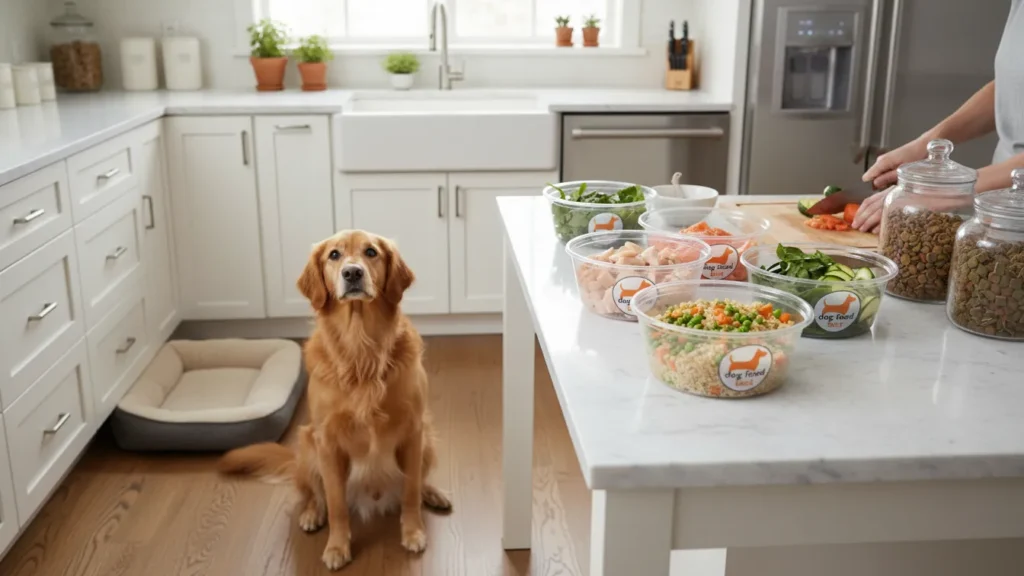
🧱 Safety Rules Before Cooking for Your Dog
Before you start cooking for your dog, a few basic safety rules are essential. Dogs have different nutritional needs than humans, and some common foods can be harmful or even toxic to them. Ingredients such as onions, garlic, grapes, raisins, chocolate, xylitol, alcohol, and excessive salt should never be used in dog food.
Portion size is another key factor. Homemade meals should be introduced gradually and served in appropriate quantities based on your dog’s size, age, and activity level. Sudden changes in diet can upset digestion, so always transition slowly over several days.
Seasonings are unnecessary and unsafe. Dogs do not need salt, spices, sauces, or oils commonly used in human cooking. Keep recipes plain and simple. Cooking methods should also be straightforward: boiling, baking, or lightly pan-cooking without oil.
If your dog has medical conditions, allergies, or is a puppy or senior, homemade food should be used cautiously and ideally discussed with a veterinarian. When done responsibly, homemade meals can be a safe and enjoyable addition to your dog’s routine.
Dog Nutrition Basics: Essential Nutrients for a Healthy Dog
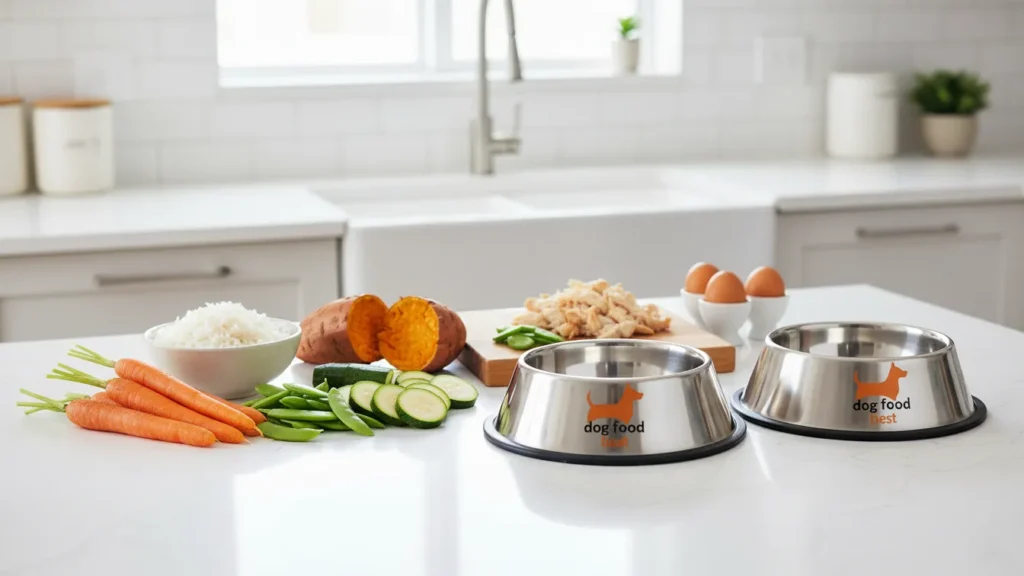
🧱 Recipes 1 & 2: Chicken and Beef-Based Meals
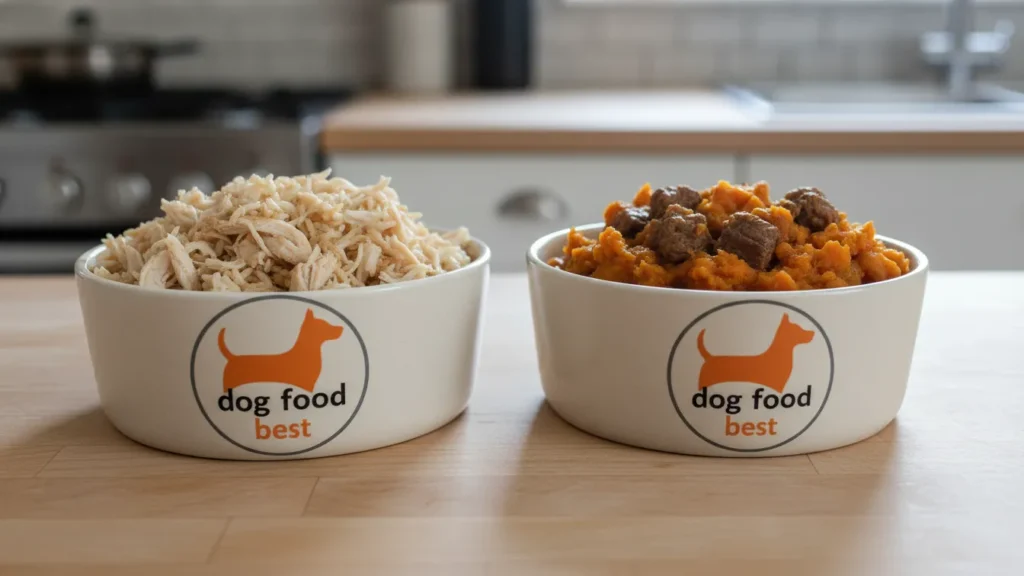
🍗 Recipe 1 — Chicken and Brown Rice Dog Meal
🐾 Why your dog will love it:
This is a classic, gentle recipe loved by dogs of all sizes. It’s easy on digestion and perfect for days when your dog needs something simple and comforting.
🥕 Ingredients:
- Boneless, skinless chicken breast
- Brown rice
- Water
🍳 How to prepare:
Boil the chicken until fully cooked, then shred it into small pieces. Cook brown rice separately until soft. Mix the chicken and rice together and let it cool before serving.
🍽️ Best for:
Adult dogs, sensitive stomachs, and recovery days.
⚠️ Safety notes:
No seasoning. Remove all bones completely.
🥩 Recipe 2 — Beef and Sweet Potato Stew
🐾 Why your dog will love it:
Hearty, warm, and filling, this recipe is great for active dogs who enjoy richer flavors.
🥕 Ingredients:
- Lean ground beef
- Sweet potato
- Water
🍳 How to prepare:
Cook the beef thoroughly, drain excess fat, and boil diced sweet potato until soft. Combine and lightly mash for easier eating.
🍽️ Best for:
Active adult dogs and dogs needing extra calories.
⚠️ Safety notes:
Use lean beef only and avoid overfeeding.
🧱 Recipes 3 & 4: Fish and Egg-Based Options
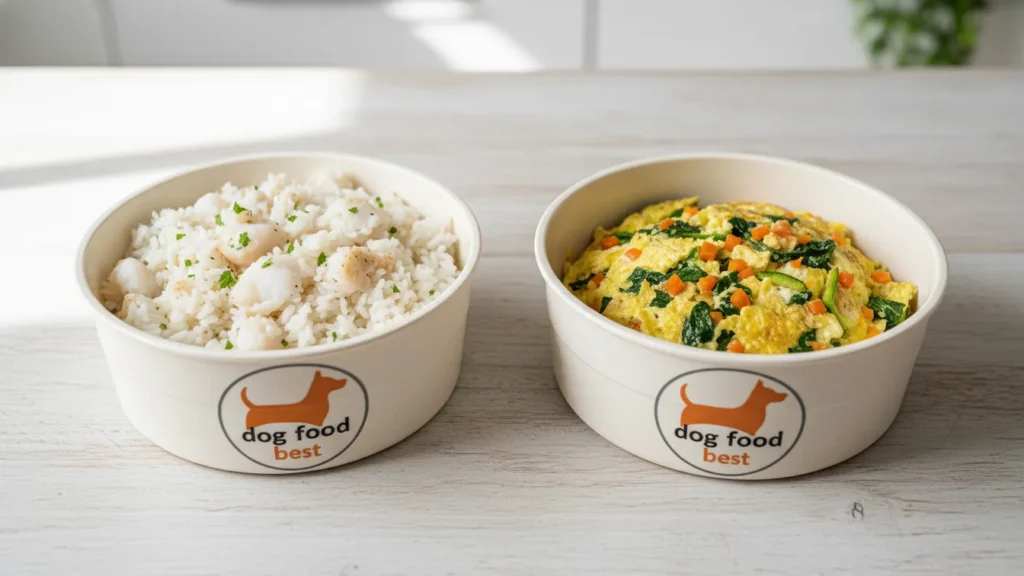
🐟 Recipe 3 — Fish and Rice Bowl (Sensitive Stomach Friendly)
🐾 Why your dog will love it:
Light, mild, and gentle, this recipe is often well tolerated by dogs with food sensitivities.
🥕 Ingredients:
- White fish (cod or tilapia)
- Brown rice
🍳 How to prepare:
Cook the fish thoroughly and flake it carefully, removing all bones. Mix with cooked rice and allow to cool.
🍽️ Best for:
Dogs with sensitive stomachs or mild allergies.
⚠️ Safety notes:
Double-check for bones before serving.
🍳 Recipe 4 — Vegetable Omelet for Dogs
🐾 Why your dog will love it:
Eggs provide high-quality protein, and this omelet adds color and variety to your dog’s bowl.
🥕 Ingredients:
- Eggs
- Carrot (grated)
- Zucchini or spinach (chopped)
🍳 How to prepare:
Lightly scramble the eggs with vegetables in a non-stick pan. No oil, no salt.
🍽️ Best for:
Adult dogs as an occasional meal or topper.
⚠️ Safety notes:
Serve cooked eggs only.
🧱 Recipes 5 & 6: Comfort Meals and Oven Recipes
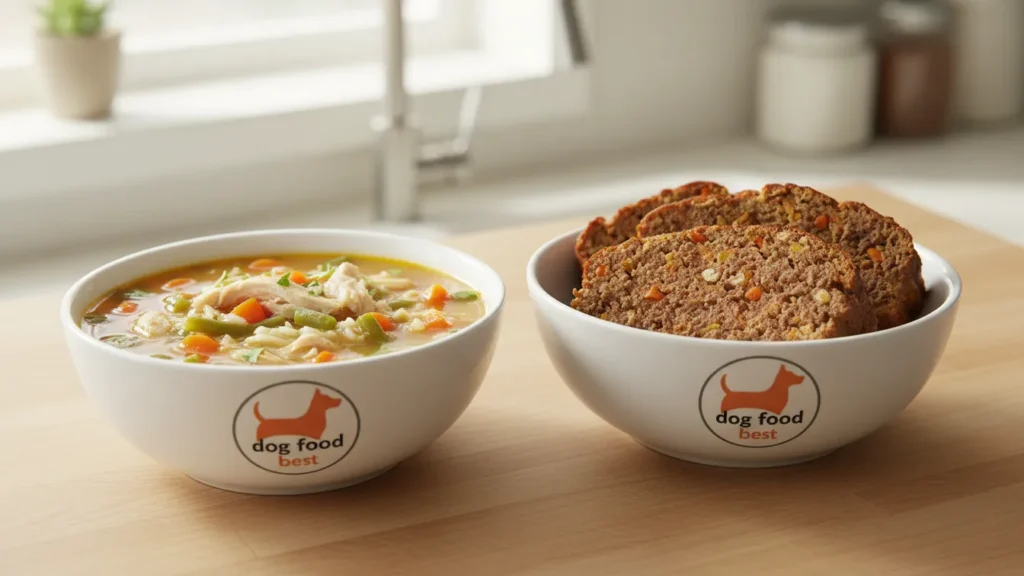
🍲 Recipe 5 — Chicken and Vegetable Soup for Dogs
🐾 Why your dog will love it:
Warm, gentle, and comforting, this soup is perfect for colder days or when your dog needs something soothing. It smells great and is easy to eat.
🥕 Ingredients:
- Cooked shredded chicken
- Carrots (chopped)
- Green beans or zucchini (chopped)
- Brown rice
- Water
🍳 How to prepare:
Boil the vegetables until soft. Add cooked chicken and rice, then simmer briefly. Let it cool before serving.
🍽️ Best for:
Dogs of all sizes, seniors, and dogs with low appetite.
⚠️ Safety notes:
No salt, broth cubes, or seasonings.
🍖 Recipe 6 — Beef Meatloaf for Dogs
🐾 Why your dog will love it:
This oven-baked meal feels special and smells irresistible. It’s a great option for meal prep and portioning.
🥕 Ingredients:
- Lean ground beef
- Rolled oats
- Egg
- Grated carrot
🍳 How to prepare:
Mix all ingredients, press into a baking dish, and bake until fully cooked. Cool, slice, and serve.
🍽️ Best for:
Adult dogs and meal prepping.
⚠️ Safety notes:
Use lean beef and avoid ketchup or sauces.
🧱 Recipes 7 & 8: Baked Treats and Omega-3 Nutrition
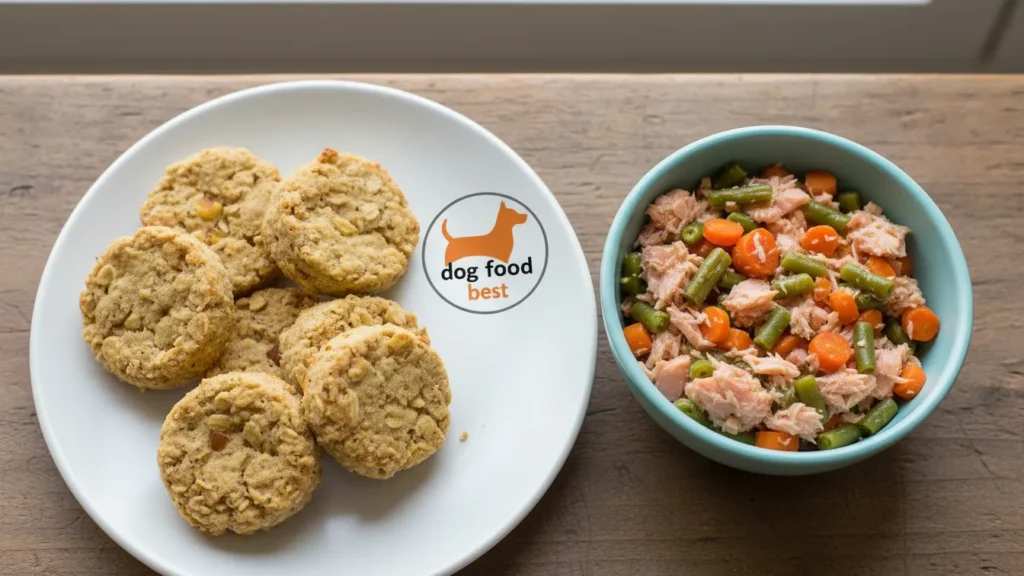
🦴 Recipe 7 — Oat and Apple Dog Biscuits (Treat)
🐾 Why your dog will love it:
Crunchy, lightly sweet, and perfect for snack time. Dogs love the smell while they bake — expect supervision.
🥕 Ingredients:
- Rolled oats
- Whole wheat flour
- Unsweetened applesauce
- Egg
🍳 How to prepare:
Mix ingredients into dough, roll out, cut into shapes, and bake until firm.
🍽️ Best for:
Occasional treats and training rewards.
⚠️ Safety notes:
Treat only. Not a full meal.
🐟 Recipe 8 — Salmon and Vegetable Bowl
🐾 Why your dog will love it:
Rich in flavor and healthy fats, this recipe supports skin, coat, and overall vitality.
🥕 Ingredients:
- Skinless salmon fillet
- Carrots and green beans
- Small amount of olive oil (optional)
🍳 How to prepare:
Cook salmon thoroughly, steam vegetables, and mix gently.
🍽️ Best for:
Adult dogs and dogs with dry skin or dull coats.
⚠️ Safety notes:
Remove all bones. Use oil sparingly.
🧱 Recipes 9 & 10: Fun Treat Recipes
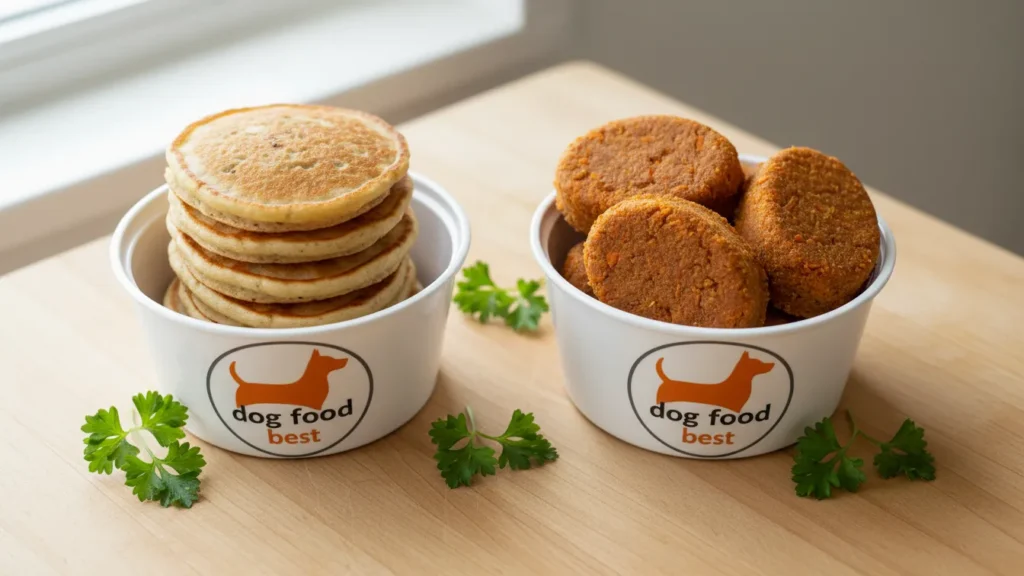
🥞 Recipe 9 — Banana and Oat Dog Pancakes
🐾 Why your dog will love it:
Soft, mildly sweet, and fun — these pancakes feel like a celebration.
🥕 Ingredients:
- Ripe banana
- Rolled oats
- Egg
🍳 How to prepare:
Blend ingredients, cook small pancakes in a non-stick pan, and cool before serving.
🍽️ Best for:
Occasional treats or special mornings.
⚠️ Safety notes:
No syrup, sugar, or toppings.
🐟 Recipe 10 — Tuna and Carrot Bites
🐾 Why your dog will love it:
Small, savory bites perfect for training or quick snacks.
🥕 Ingredients:
- Tuna in water (drained)
- Grated carrot
- Egg
🍳 How to prepare:
Mix ingredients, shape small bites, and bake until firm.
🍽️ Best for:
Training treats and portion control.
⚠️ Safety notes:
Use tuna occasionally, not daily.
🧱 How to Use Homemade Recipes Safely
Homemade dog food works best when used with balance and common sense. These recipes can be served as occasional meals, mixed with commercial kibble, or used as special treats. Most dogs do not need homemade food every day to benefit from it.
Introduce new recipes gradually and observe how your dog reacts. Watch for changes in digestion, energy levels, or appetite. If something doesn’t agree with your dog, stop and return to familiar food.
Portion size matters. Even healthy homemade food can lead to weight gain if overfed. Start small, adjust slowly, and remember that treats count as calories.
Homemade food should feel joyful, not stressful. When prepared with care and moderation, these recipes add variety, comfort, and a little extra love to your dog’s routine.
🧱 How Often to Feed Homemade Dog Food
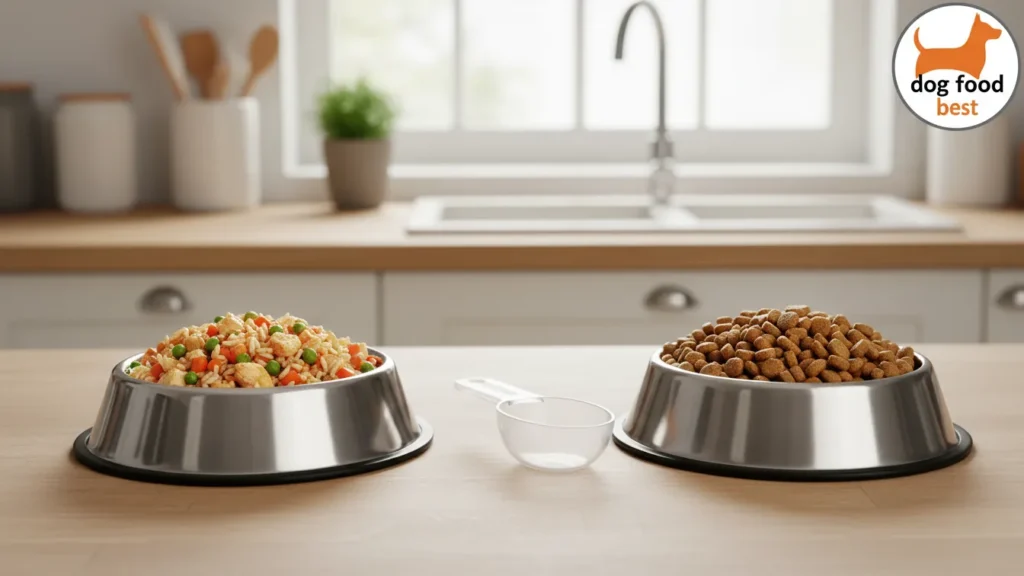
Homemade dog food works best when used with balance and common sense. For most dogs, these recipes are ideal as occasional meals, meal toppers, or special treats, rather than a full-time replacement for a complete commercial diet. Mixing homemade food with kibble is a popular approach that adds freshness and variety without risking nutritional imbalance.
When introducing homemade food, start slowly. Replace a small portion of the regular meal and increase gradually over 3–7 days. This helps your dog’s digestive system adjust and reduces the risk of stomach upset. Observe stool quality, energy levels, and appetite during the transition.
Portion size should always match your dog’s size, age, and activity level. Even healthy homemade food contains calories, and overfeeding can lead to weight gain. Treat recipes should be used sparingly and counted as part of the daily intake.
Homemade food should feel like a positive addition, not a strict rule. If your dog thrives on a mostly commercial diet with occasional homemade meals, that’s a perfectly healthy balance.
🧱 Storage, Freezing, and Meal Prep Tips
Proper storage is essential to keep homemade dog food safe and fresh. After cooking, allow food to cool completely before storing. Refrigerated meals should be kept in airtight containers and used within 2–3 days.
Freezing is an excellent option for meal prep. Portion meals into individual servings before freezing, making it easy to thaw only what you need. Frozen homemade dog food can last up to 2 months when stored properly.
When serving refrigerated or frozen food, bring it to room temperature before feeding. Cold food straight from the fridge may upset sensitive stomachs. Never leave homemade food at room temperature for extended periods.
Label containers with preparation dates to avoid guessing. Clean bowls thoroughly after each meal, especially when serving moist foods. A little organization goes a long way in keeping homemade feeding safe and stress-free.
🧱 Homemade vs Commercial: When to Use Each
Homemade and commercial dog food do not need to compete — they can work together. Commercial dog food provides consistent, complete nutrition and is the safest long-term option for most dogs. Homemade food shines as a complement, offering variety, freshness, and emotional connection.
Homemade meals are especially useful during recovery periods, for picky eaters, or when adding moisture and flavor to dry kibble. However, relying exclusively on homemade food requires careful nutritional planning and, ideally, professional guidance.
For most households, the best strategy is flexibility. Use commercial food as the foundation and homemade recipes as enrichment. This approach delivers nutritional stability while still allowing you to cook for your dog with confidence and care.
Homemade vs Commercial Dog Food: Pros, Cons, and What’s Best
🧱 FAQ + Final Notes
❓ Frequently Asked Questions
Can I feed homemade dog food every day?
It’s possible, but daily homemade feeding requires careful planning and supplementation. For most dogs, occasional homemade meals are safer and easier.
How much homemade food should I give my dog?
Start small. Portion size depends on your dog’s weight, age, and activity. Homemade food counts as calories.
Is rice okay for dogs?
Yes. Cooked brown or white rice is commonly used in dog food and is easy to digest.
Can I mix homemade food with kibble?
Absolutely. Mixing is one of the safest and most popular approaches.
What vegetables are safe for dogs?
Carrots, green beans, zucchini, spinach, and sweet potatoes are generally safe when cooked.
How do I switch my dog’s food safely?
Always transition gradually over several days.
How to Switch Dog Food Safely: A Step-by-Step Transition Guide
🐾 Final Notes
Homemade dog food should be joyful, simple, and safe. These free recipes were created to help you add variety and care to your dog’s meals without stress. Bookmark this page, try new recipes slowly, and enjoy the process — your dog certainly will.